
Melt Stream Delivery in Injection Molding: How Integrated Systems Drive Performance
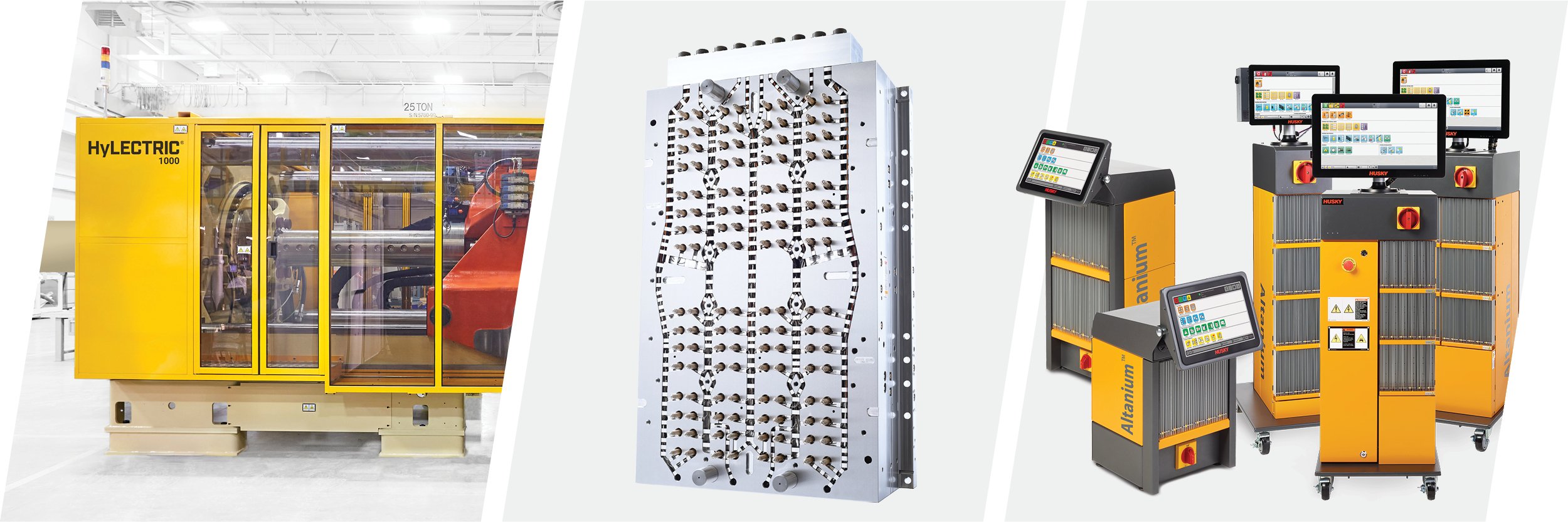
Melt stream delivery is the controlled flow of molten plastic from the injection unit through the hot runner system and into the mold cavity. It is one of the most consequential and frequently underestimated variables in injection molding. When optimized, it drives consistent part quality, faster cycle times, and lower production costs. When neglected, it introduces variability that compounds across every stage of production.
In this article, we'll take a closer look at how Husky's integrated approach combines high-performance machines, innovative hot runner systems, and intelligent mold control into a unified system engineered to eliminate that variability at its source.
What Is Melt Stream Delivery in Injection Molding?
Melt stream delivery is the controlled flow of molten plastic from the injection unit through the hot runner system and into the mold cavity. It directly determines part quality, material efficiency, cycle time, and equipment longevity across applications ranging from thin-wall food containers and beverage closures to precision medical components.
Optimal melt stream delivery enables:
- Consistent part quality and dimensional accuracy: Uniform melt conditions produce superior dimensional accuracy and consistent mechanical properties, reducing variability across production runs.
- Efficient material usage with minimal waste: A well-optimized system directs molten plastic precisely into the mold cavity, minimizing scrap and reducing both cost and environmental impact.
- Faster cycle times: Efficient melt delivery enables quicker mold filling, boosting throughput and reducing time-to-market.
- Extended equipment lifespan: Proper melt stream management reduces stress on hardware components, contributing to longer service life.
- Versatility across materials and applications: A sophisticated system handles a wide range of resins, including heat-sensitive polymers and emerging bioresins, enabling manufacturers to adapt to diverse and evolving production requirements.
- Optimal system configuration and sizing: Integrated systems account for raw material, part geometry, cycle time, and color change requirements to deliver the lowest total cost of ownership.
What Causes Melt Delivery Problems in Injection Molding?
Melt delivery problems in injection molding are rarely caused by a single factor. In most cases, they reflect gaps in process control, material handling, system integration, or operator expertise, and often several of these at once.
Each of these areas introduces distinct risks to melt delivery quality:
- Process Variability and Control
Precise, real-time control of temperature, pressure, and flow across multiple system components is essential for consistent part quality. Synchronizing these variables demands advanced integration and the ability to make dynamic adjustments throughout the production run. - Material Handling and Processing
Heat-sensitive and corrosive materials require careful handling to prevent degradation. Managing fast color changes without sacrificing quality adds further complexity. Maintaining consistent gate quality over long production runs (critical for part aesthetics and uniformity) demands durable equipment and innovative flow management solutions. - Efficiency and Sustainability
Balancing fast cycle times with part quality and equipment longevity is an ongoing challenge. Reducing energy consumption and material waste throughout the molding process requires a system-level approach, where every component is optimized in relation to the others. - System Integration and Optimization
Optimal melt stream delivery depends on the seamless integration of machines, hot runners, and mold control systems. Systems must be versatile enough to perform across a range of materials and applications, and flexible enough to adapt as production requirements and market demands evolve. - Operator Experience and the Skills Gap
Experienced machine operators and processing experts are retiring at an accelerating rate, creating significant knowledge gaps in one of injection molding's most critical disciplines.
Bridging this gap requires technology that is user-friendly, automated, connected, and intuitive. Husky Advantage+Elite™ remote, real-time, predictive monitoring solution addresses this directly, connecting high-performance equipment with critical operator feedback to maintain performance regardless of operator experience level.
How Does an Integrated Melt Delivery System Improve Production?
A fully integrated melt delivery system, where the machine, hot runner, and mold controller are engineered to work together, delivers performance that no combination of independently sourced components can match.
Each element is optimized in relation to the others, eliminating interface inefficiencies and enabling real-time cross-system adjustments that no standalone component can deliver on its own. System-level enhancements to each discrete component allow challenges to be addressed holistically, yielding higher levels of control, efficiency, and part quality.
A genuinely integrated approach delivers:
- Elimination of variability across the injection molding process
- Higher productivity and operational efficiency from initial resin melting through final cavity filling
- Reduced material waste and lower energy consumption
- Superior part quality, including for the smallest and most precise components
- Faster cycle times and reduced time-to-market
- Enhanced flexibility to process diverse materials, including unconventional resins such as bioresins increasingly used in food and beverage packaging applications
How Does Husky Integrate Machine, Hot Runner, and Mold Control?
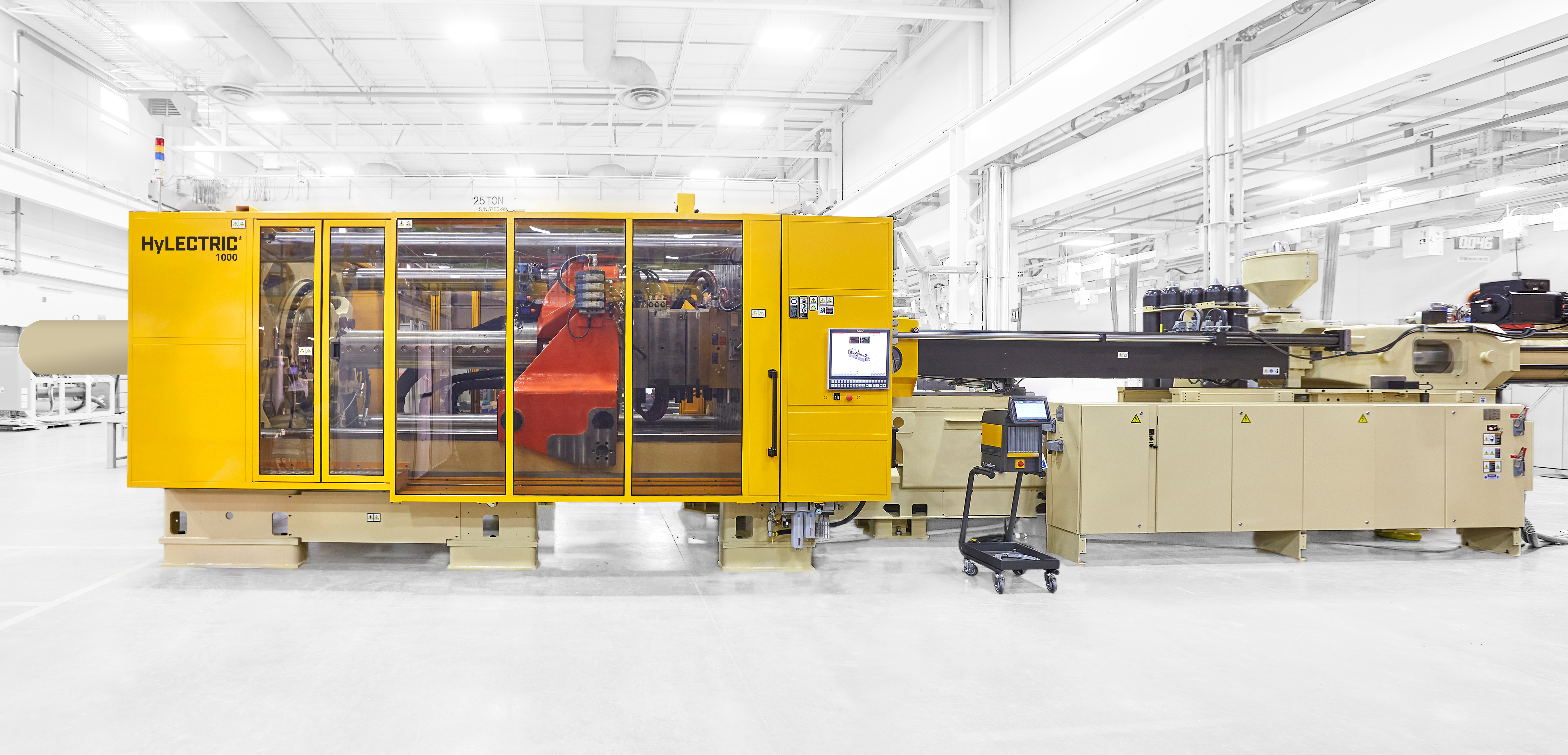
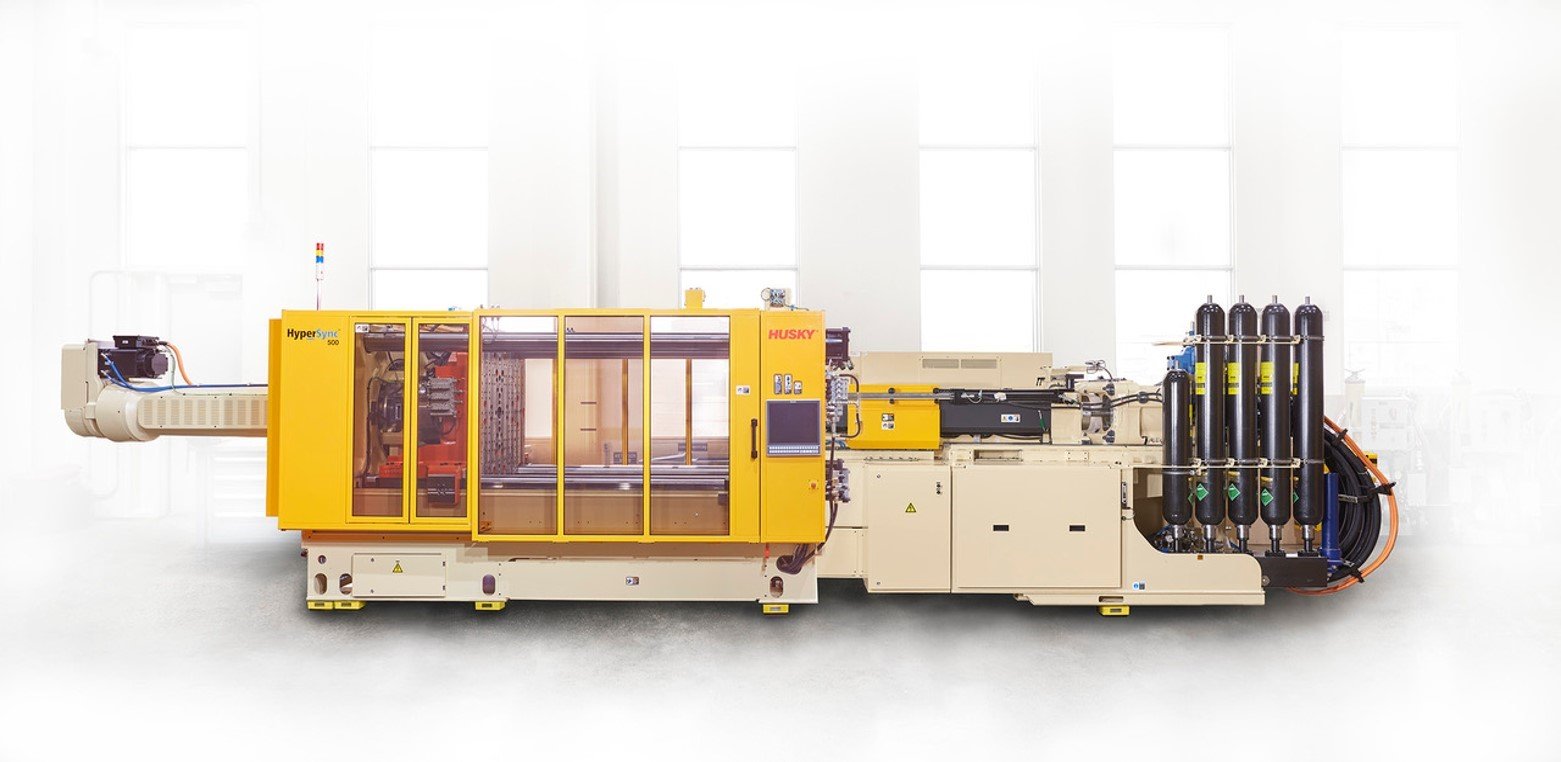
Husky's integrated melt delivery system is built around three core components, each optimized individually and engineered to function as a unified system:
Husky High-Performance Machines
Husky machines are built with all individual elements optimally sized and configured, yet engineered to work together for high performance, energy efficiency, and ease of use.
Key features include:
- Advanced clamp and injection units for precision and speed
- A wide screw selection with geometries optimized for diverse raw materials and specific molding process conditions
- An intuitive operator interface with intelligent networking for ease of use
- Energy-efficient features including electric mold stroke, servo-pump powerpack, and an adaptive hydraulic system
Complete system integration between the machine, hot runner, and mold controller makes it possible to leverage the benefits of each technology across every element of the melt delivery system.
Husky’s Innovative Hot Runner Systems
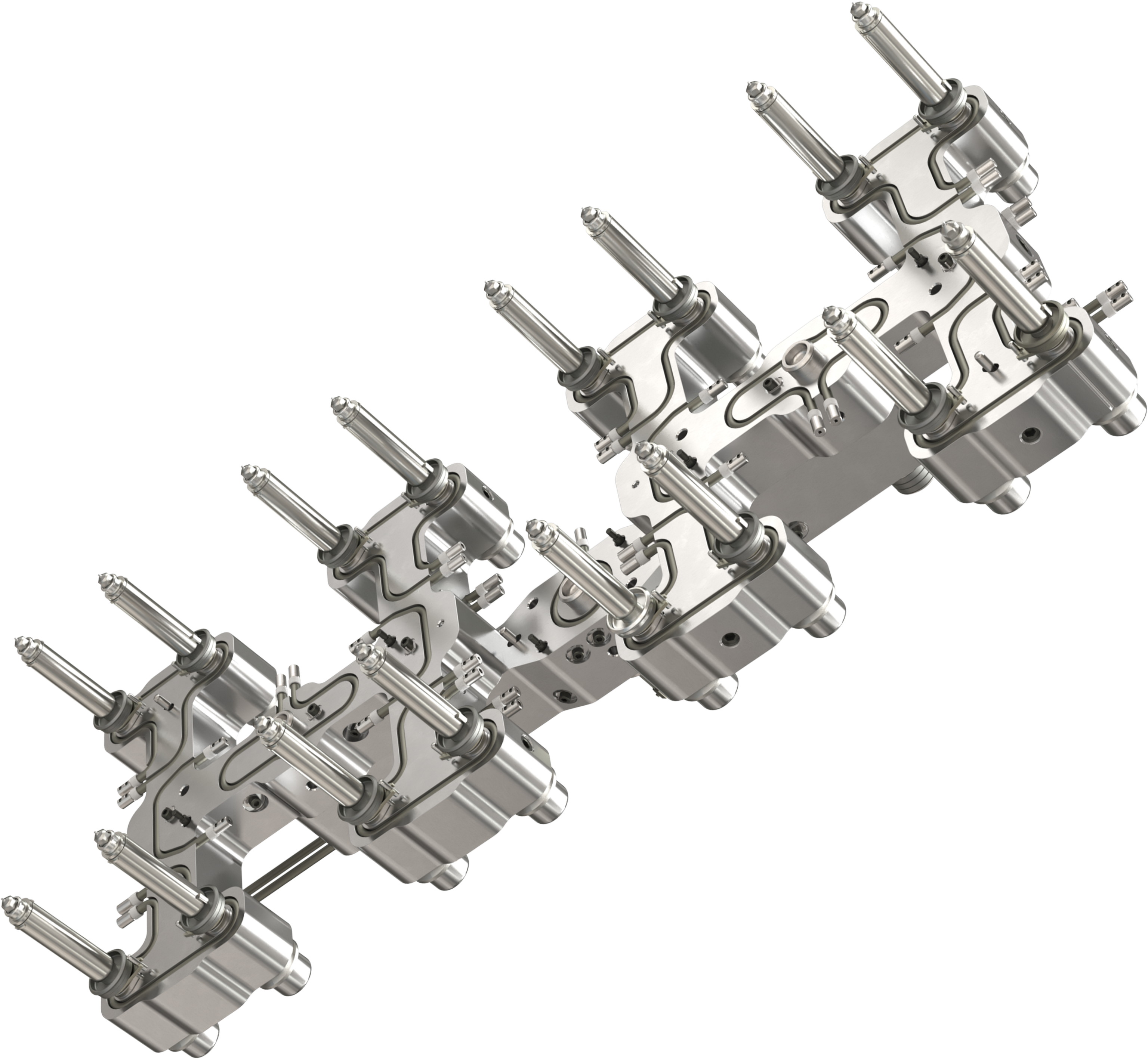
Husky hot runners are engineered to meet specific application requirements, including mold cavity configuration, gate spacing, resin type, injection process requirements, part size and shape, and mold and machine interfaces. Their design reflects four core principles:
- Geometrically balanced melt channel networks in all manifolds, ensuring cavities are reliably filled within equipment capability
- Nozzles and manifolds engineered to withstand high injection pressures while accounting for the sensitive thermal requirements of multiple polymer families
- Wide temperature window operation with patented features that eliminate the risk of costly leaks
- A modular, adaptable Ultra nozzle design that manages gate quality and thermal uniformity and is engineered for ease of maintenance
Specific technologies include Ultra Helix™ valve gate technology for precise alignment and long-lasting gate quality over millions of cycles; UltraSync™ for synchronized valve stem movement that ensures consistent part filling even with close nozzle spacing; and UltraMelt™, which provides a non-reactive melt path that minimizes degradation risk across a wide range of sensitive materials.
Together, these features deliver a melt management system with the market's lowest total cost of ownership.
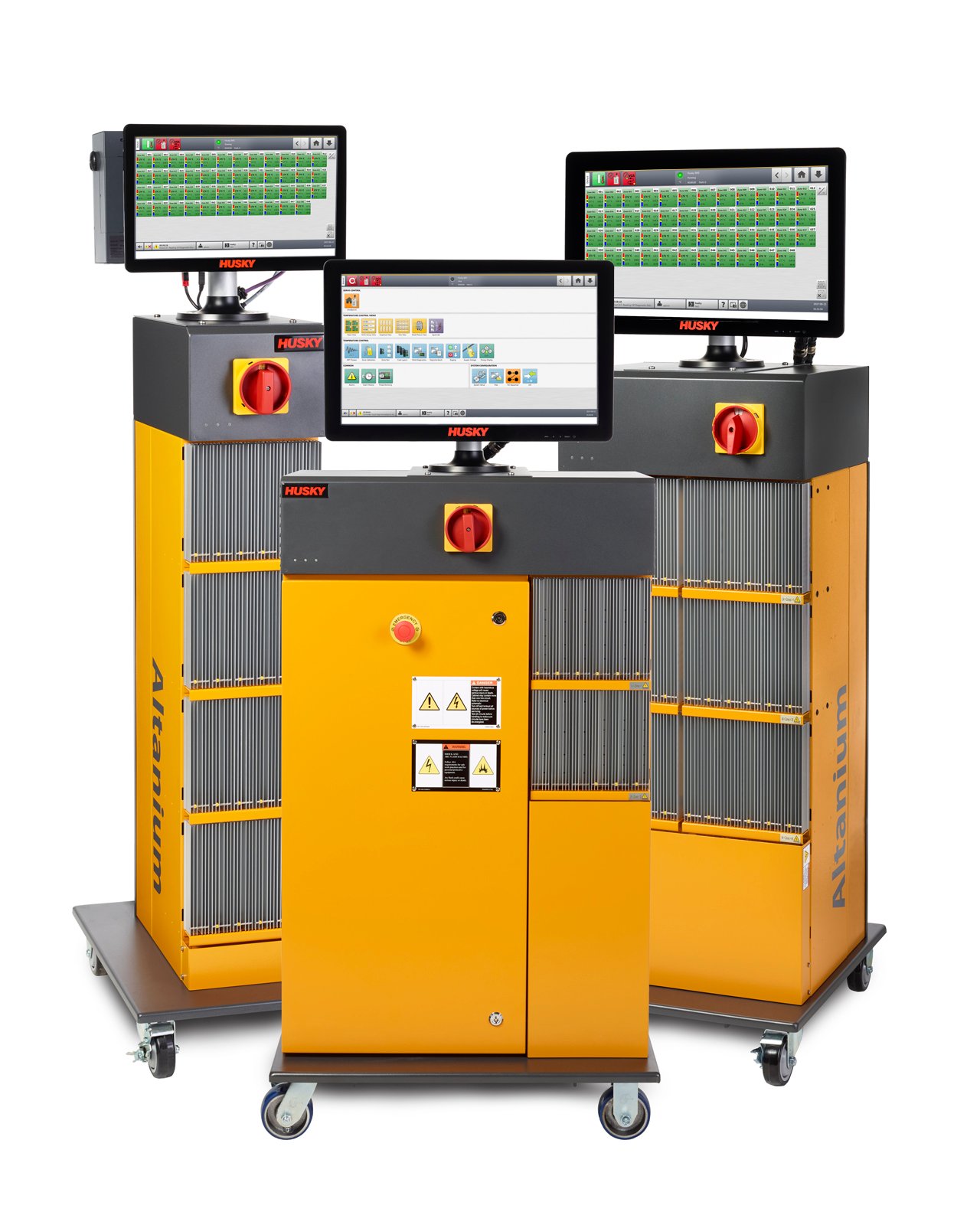
Husky’s Intelligent Mold Control
Precise and repeatable temperature control is essential to optimal melt management and delivery. Husky's Altanium® family of mold controllers delivers accurate temperature, valve gate, and mold servo control through a single operator interface, enabling higher-performing molds and superior part quality.
ART 2.0 (Active Reasoning Technology) extends these capabilities further, delivering:
- Faster heat-up times
- 30% lower energy usage compared to competitive systems
- More precise control for improved productivity and reduced waste
- Faster setup times
What Support Does Husky Provide Beyond the Equipment?
With more than 30 years of engineering and application expertise, Husky offers a global service and support network that extends well beyond equipment supply, including:
- Lifecycle Support: From hot runner refurbishment and prototyping assistance to advanced flow simulation, Husky supports operations at every stage of production.
- Process Optimization: Husky's team provides process and tool optimization, drawing on deep expertise in melt behavior and mold design to enhance production efficiency and part quality.
- Material Expertise: Resin testing capabilities and guidance on material selection and optimization ensure compatibility with Husky systems and alignment with production goals.
NEXT STEPS
Book a meeting with a Husky expert to learn how our latest technologies can address your packaging molding needs.