
PET Packaging: Driving Sustainability & the Circular Economy
As sustainability and circular compliance pressures mount, manufacturers and brands relying on single-use, short-lifecycle, or multi-material packaging are actively rethinking their strategies. Many are now transitioning to PET to stay competitive and avoid non-compliance with global legislative efforts that aim to increase recycling and promote the use of recycled content.
In this article, we'll take a closer look at the advantages of PET and why it has become the go-to material for food and beverage packaging in today's circular economy.
What Regulations Are Driving PET Adoption?
Recycled content mandates in Europe, South America, and North America are pushing brands toward PET. The most prominent might be the European Union's Single Use Plastic (SUP) Directive, which sets minimum recycled content requirements for member states. It focuses on phasing out single-use plastic items and increasing usage of recycled content in plastic bottles. The draft version of the Packaging and Packaging Waste Regulation that is pending approval would expand recycled content requirements to plastic packaging beyond bottles and set 2040 requirements for plastic packaging.
Other regions are following suit:
- South America: Colombia, Chile, and Uruguay have established recycled content mandates for PET bottles
- North America: New Jersey, Washington, and California have set targets for 15% to 25% recycled content by 2025
What Is the Circular Economy?
The circular economy is a term that has been used to describe a regenerative system designed to minimize waste while maximizing resource efficiency. Its core principles include designing products for durability and recyclability, reusing materials, and recovering resources at the end of their lifecycle through recycling.
In food and beverage packaging, circular economy initiatives focus on legislative requirements and industry standards that promote sustainable packaging and recyclability. Together, they set a clear framework for compliance and best practices.
Why Choose PET for Circular Packaging?
Compared to aluminum, glass, and carton, PET gives manufacturers and brands three key advantages for meeting new sustainability standards:
- Immediate environmental benefits
- Increased design flexibility
- Cost efficiency and production optimization
What Are PET's Environmental Benefits?
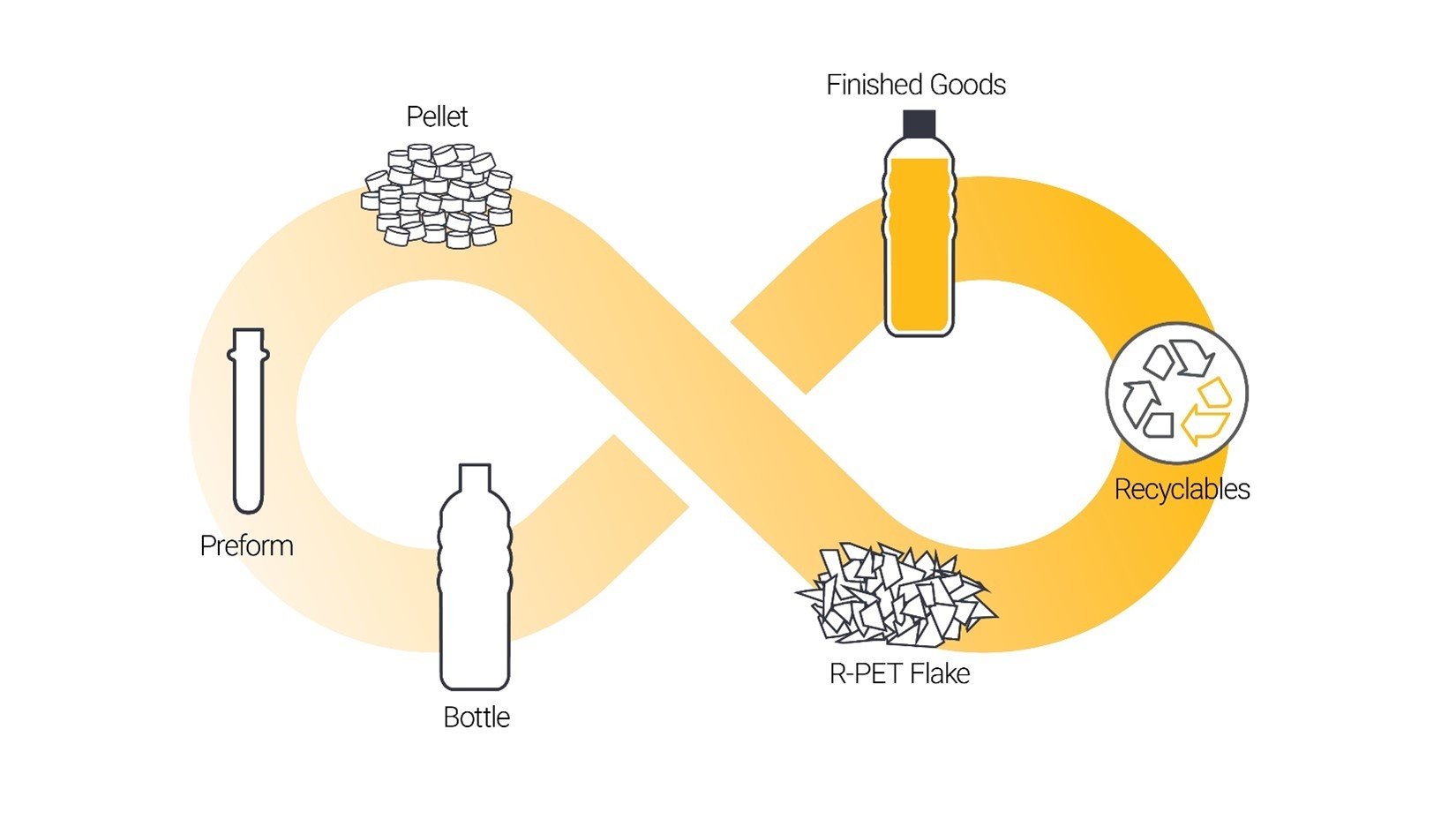
PET produces lower greenhouse gas emissions, consumes less energy, and generates less waste compared to commonly used alternatives. Its fully recyclable components also support a closed-loop system that minimizes resource depletion and reduces environmental impact.
A recent study by The National Association for PET Container Resources (NAPCOR) compared a 16-ounce PET bottle to a 12-ounce aluminum can and found that the PET bottle:
- Consumed 80% less energy during production
- Generated 80% less solid waste
- Used 53% less water
Over the course of a year, the study estimated that PET bottles could:
- Save approximately 4.4 billion litres of water, equivalent to removing approximately 688,000 gas-powered cars from the road
- Divert approximately 138 million bags of trash from landfills in the United States
Real-World Conversion: Glass and Aluminum to PET Jars
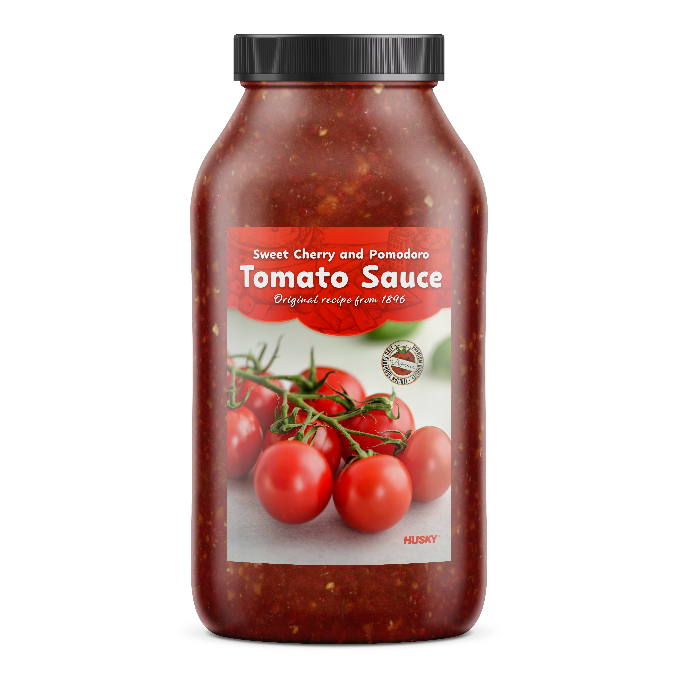
A European pasta sauce brand recently made a significant shift in its packaging strategy by moving from traditional glass jars and aluminum cans to PET jars. To facilitate this change, the sauce brand implemented APPE Thermalite technology, a PET packaging solution designed for hot-fill applications that enables the pasteurization of products and supports a hot filling process at temperatures of up to 95ºC. The new PET jars:
On the production line, the brand makes both jar sizes with the same 24-cavity mold:
|
How Does PET Support Circular Design?
PET's inherent versatility gives manufacturers the design flexibility to support a range of circular packaging initiatives, including:
- Lightweighting: PET enables the creation of lightweight packaging that reduces plastic use, CO2 emissions, and resin consumption.
- Label-free packaging: PET supports label-free designs, simplifying recycling, reducing contamination, and minimizing non-recyclable waste.
- Mono-material packaging: By manufacturing closures from the same material as the bottle, PET makes it easier to improve the sustainability and circularity of the entire beverage package, as recycling becomes simpler and the required infrastructure is already in place.
- Premiumization: PET allows brands to elevate their packaging through strategies like thermochromic color effects, luminescent designs, unique bottle shapes, and collapsible packaging.
Real-World Conversion: Carton to PET Bottle
|
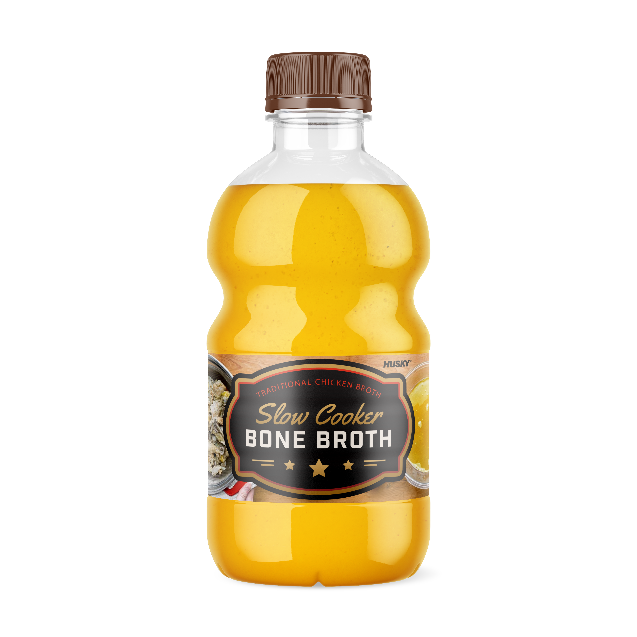
In 2020, a ready-to-serve soup company transitioned its line of soups from a 1 litre multi-material carton to a 750 ml PET bottle. The 100% recyclable, bottle-to-bottle solution delivered:
|
How Does PET Improve Cost Efficiency?
PET provides a reliable supply chain even in the face of rising energy costs and disruptions. Its design flexibility supports customizable packaging solutions that meet market and sustainability demands.
Real-World Conversion: Glass to PET Syrup Bottles
|
In the pharmaceutical sector, medicinal syrups have traditionally been packaged in glass. In a recent case, a Husky customer leveraged our team's expertise in PET technology, including prototyping and trials, to successfully transition from glass to PET medical syrup packaging. This resulted in:
|
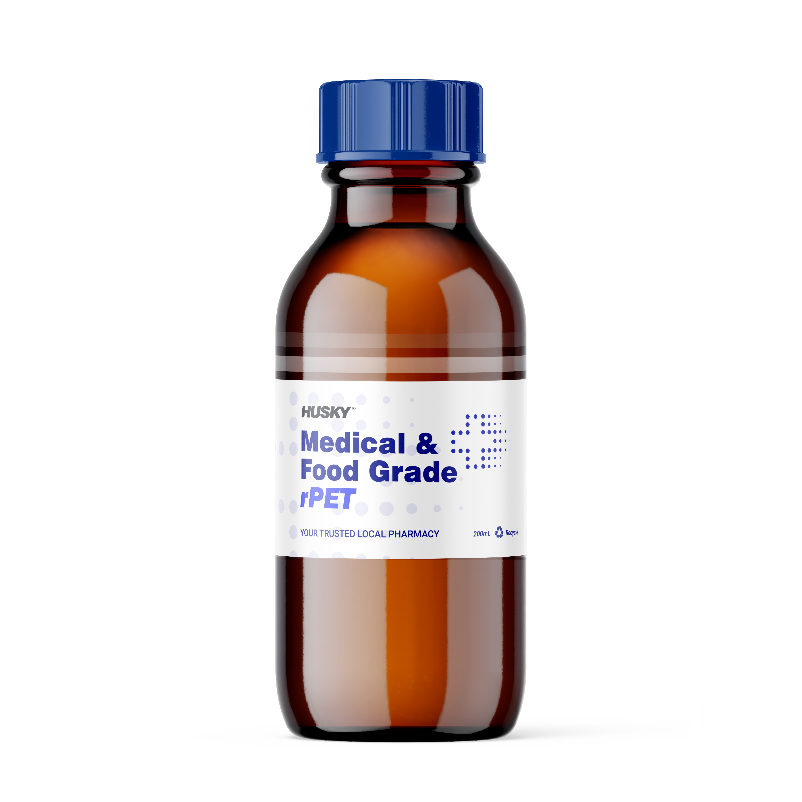
What Is rPET?
Recycled PET (rPET) is primarily sourced from used PET bottles. These are collected through formal recycling systems in places like Scandinavia, Germany, Japan, and Taiwan, as well as informal setups in regions such as India and Myanmar. The recycling process involves:
- Sorting
- Washing
- Decontaminating
- Converting bottles into flakes and pellets through extrusion, filtration, and pelletizing
Quality control measures ensure that rPET meets product specifications by checking intrinsic viscosity, crystallinity, and acetaldehyde levels.
While rPET is commonly blended with virgin PET, there is a growing trend toward using 100% recycled content. Husky provides detailed rPET specification sheets for food-grade pellets and flakes, covering:
- Recommended sizes
- Contamination limits
- Viscosity ranges
- Crystallinity
- Melting points
How Does Husky COMPLETE™ Maximize PET Production?
Husky COMPLETETM gives PET preform and packaging producers the ability to transform variability into stability throughout production, enabling world-class productivity and the highest quality, most sustainable packaging – at the lowest cost.
Husky COMPLETE™ with Husky Advantage+Elite™ provides real-time monitoring that proactively secures and maintains the lowest total cost of production by:
- Increasing availability, performance, and quality
- Eliminating the cost of emergencies
- Reducing material and energy usage
- Increasing plant knowledge and capability
Husky COMPLETE™ is supported by our latest generation platform of HyPET®, HyLECTRIC®, and HyperSync® systems. We work closely with OEM partners to refine and evolve our injection molding technology, maintaining the highest requirements for package performance and consumer experience.
Next Steps
Reach out to our team of PET experts to learn more about how we can enable your switch to a circularly compliant package. Book a Circular Packaging Assessment and Husky’s packaging experts will assess your production and packaging needs, recommend the best strategy for circularity, and much more.