
How to Reduce PET Bottle Costs with Lightweight Preform Design
Lightweighting your PET preforms and bottles (also known as PET bottle lightweighting) is one of the fastest ways to reduce production costs and improve profitability. While this technique has long been used as a cost-saving measure, approaches to reducing bottle weight continue to evolve, and the business case is stronger than ever.
In this article, we’ll look at what lightweighting involves, its key benefits, four proven design approaches, and how to make a solid business case.
What Are the Benefits of Lightweight Packaging?
Lightweight PET bottles deliver multiple advantages beyond just resin savings, including cost reduction, carbon footprint reduction, and improved market positioning.
Here's how bottle weight reduction can benefit your business:
- Helping with your sustainability goals: Every gram of resin saved also helps you reduce your CO₂ emissions.
- Offsetting other cost increases: Reducing bottle weight can be strategically applied to offset rising production costs due to increased use of recycled PET, which is more expensive than virgin resin.
- Differentiation: Some approaches to this weight-reduction process involve new neck and closure designs that can be part of a market differentiation strategy.
- Staying future-ready: In many markets around the world, legislation will soon call for the use of tethered closures to meet sustainability requirements. Some approaches to lightweighting make it easier to adapt to these upcoming legislations.
How Can You Lightweight PET Bottles?
You can reduce PET bottle weight by targeting four main components: the neck, closure, body, and base. These lightweighting methods work individually or together to save resin without compromising strength:
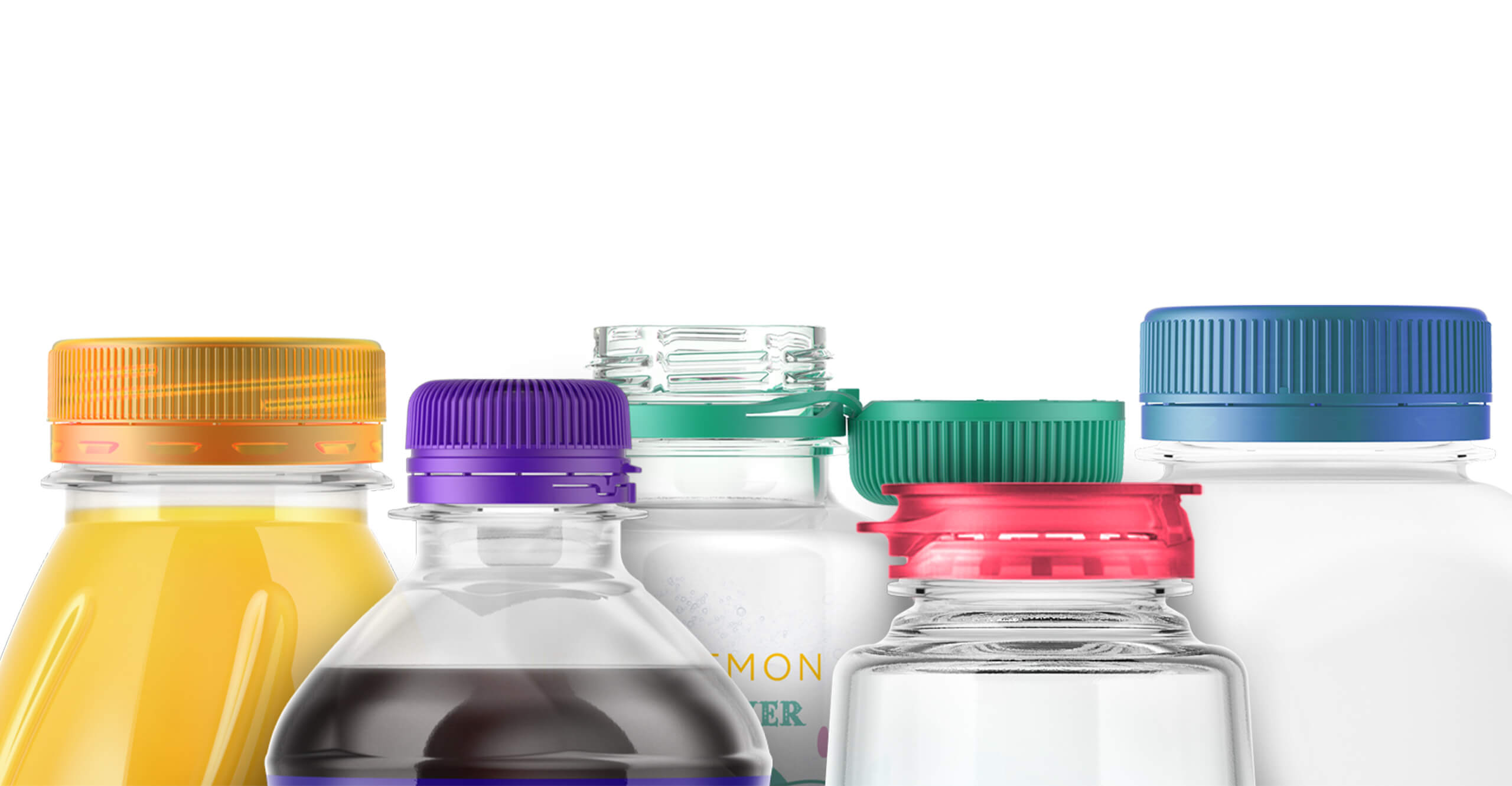
- Switching to a lightweight version of your existing neck and closure system: For example, if you are using the PCO 1881 neck finish, you can save on resin by converting to the newest lightweight version of this neck. In this case, the basic design remains the same, but small modifications reduce the amount of resin required for each unit.
- Switching to a new, lightweight neck and closure design: This approach delivers greater resin savings when compared to switching to a lightweight version of your existing neck finish. For example, depending on your application, you can switch from PCO 1881 to the 26/22 GME 30.37 neck finish, which saves approximately 1.88g of resin per unit between the neck finish and closure.
- Redesigning the bottle's body to use less resin: This can be accomplished by altering the preform design with thinner walls and other design changes to the body itself.
- Redesigning the base of the bottle to use less resin: For example, Husky offers the EcoBase preform design that can reduce resin use in the bottle's base by up to 2.5 percent.
Is PET Bottle Lightweighting Worth It?
Yes, lightweighting delivers compelling financial returns and environmental benefits both in the short and long term. Even when considering the variability in resin prices over the past several months, the economics of lightweighting make a strong business case.
To illustrate the potential savings from bottle weight reduction, we will explore the real-world example of a brand that converts to a lightweight 26/22 GME 30.37 neck finish and closure for a carbonated soft drink. The current PET preform uses the PCO 1881 neck finish.
Assuming this producer manufactures a yearly volume of 12,000,000,000 units and uses 100% virgin resin, here are the potential resin and cost savings from going lightweight:
- Resin savings: 1.88 g/bottle
- Total resin savings: 22,560 metric tons/year
- Cost savings: US $26.6 million/year
- Carbon emissions savings: 57,377 metric tons/year
As you can see from the numbers, this is a promising business case. To complete the process, you must factor in the total costs of switching to the lightweight preform design.
Typically, this would include the cost of the mold components and any line components, which would vary depending on the choice of new lightweight neck finish, the preform system itself, who is carrying out the mold switchover, and how long it takes.

How Do You Implement Lightweighting Without Sacrificing Quality?
Successful lightweighting requires balancing cost savings with performance by following proven best practices that maintain strength, shelf life, and customer satisfaction. Follow these guidelines to ensure your lightweighting initiative delivers results:
- Consumer experience: Any proposed design changes must be considered first and foremost from the standpoint of the consumer, ensuring a consistently positive experience and brand interaction.
- Performance: With any weight reduction initiative, it is important to look holistically at the overall preform weight balance and preform design in order to maintain uncompromised package performance.
- Quality and precision: Regardless of the lightweighting method you choose, precision is essential for success. As you remove resin from your preform designs, consistency and accuracy in the production process become increasingly important; otherwise, increased defects and waste will offset your potential savings. You must be sure that your system and molds are properly equipped to handle lightweight designs.
- Working with an experienced provider: Any change to your production process introduces risk. With margins already tight this year and little tolerance for downtime, it is important that the changeover process is done right and with consideration given to the potential impact on your entire production process. An experienced provider understands the big picture and helps minimize all of that risk. For example, with Husky, the lightweighting process can be completed in as soon as six to nine weeks, depending on the scope.
How Can You Calculate Your Potential Savings?
You can instantly estimate your lightweighting savings using Husky's proprietary Lightweight Savings Calculator.
Husky has a proven record of helping customers reduce manufacturing costs through PET preform lightweighting, and our calculator tool is designed specifically for neck and closure system conversions.
Many of our customers are already reducing their production costs and environmental footprint by lightweighting their carbonated-soft-drink preforms and bottles.
Explore how Husky’s beverage packaging expertise and precision tooling can help you achieve similar results.