
Why Leading Brands Are Switching From Hot Fill to Sustainable Aseptic Packaging
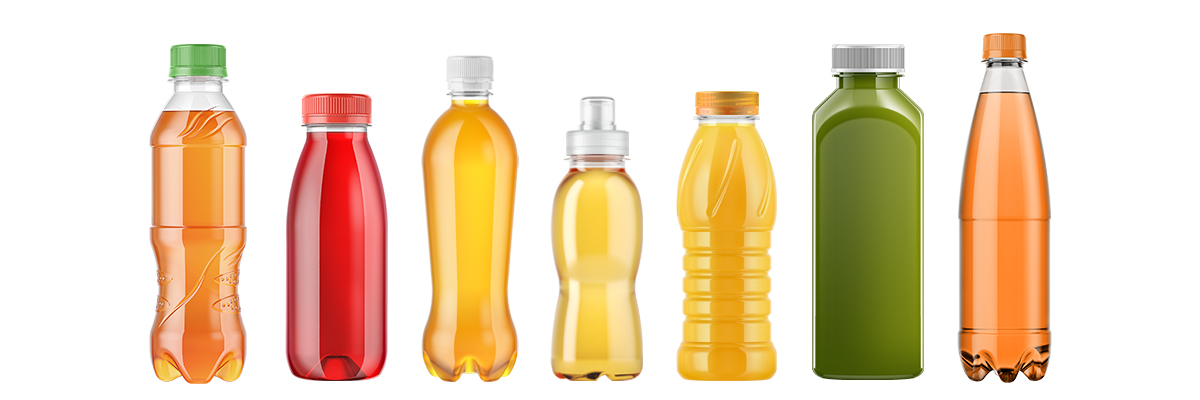
Aseptic packaging has emerged as a popular solution for brands and producers, enabling many to meet consumer preferences for sustainable packaging and increased health consciousness.
In this article, we'll take a closer look at the advantages of aseptic packaging processes and how you can leverage this solution to successfully drive profits.
How Fast Is the Aseptic Packaging Market Growing?
The global aseptic packaging market is expected to reach a value of more than $70 billion (USD) in 2024 and grow at a CAGR of 10.47% to exceed $116 billion by 2029.
Consumer trends are driving this growth. Health-conscious buyers continue to seek functional and better-for-you products. Aseptic packaging's flexibility and use of recycled materials make it an increasingly popular choice for producers looking to meet these needs.
As demand for healthier beverages rises over the next decade, aseptic packaging is expected to capture an even larger market share globally, particularly in North America.
What is the difference between aseptic and hot fill packaging?
The key difference is temperature. Hot fill relies on high temperatures during filling to sterilize products, while aseptic processes do not. For manufacturers aligning with evolving consumer preferences, this gives aseptic packaging three major advantages:
Lightweight flexibility
Hot fill packages must be molded with panels and ridges to withstand high temperature changes during filling. This limits lightweighting and results in a heavier package. Aseptic processes do not require such high temperatures, so packages can be lighter with little to no design constraints. That translates to instant cost savings on resin, a key advantage in a competitive, shelf-space-constrained beverage market.
Superior nutrient preservation
The high temperatures used in hot fill sterilize products effectively, but they also deplete essential vitamins and nutrients. Aseptic packaging preserves the inherent nutritional richness of products.
100% rPET usage
High temperature changes in hot fill also limit how much rPET a package can contain, which limits its sustainability and circularity. Aseptic packaging enables the use of up to 100% rPET material.
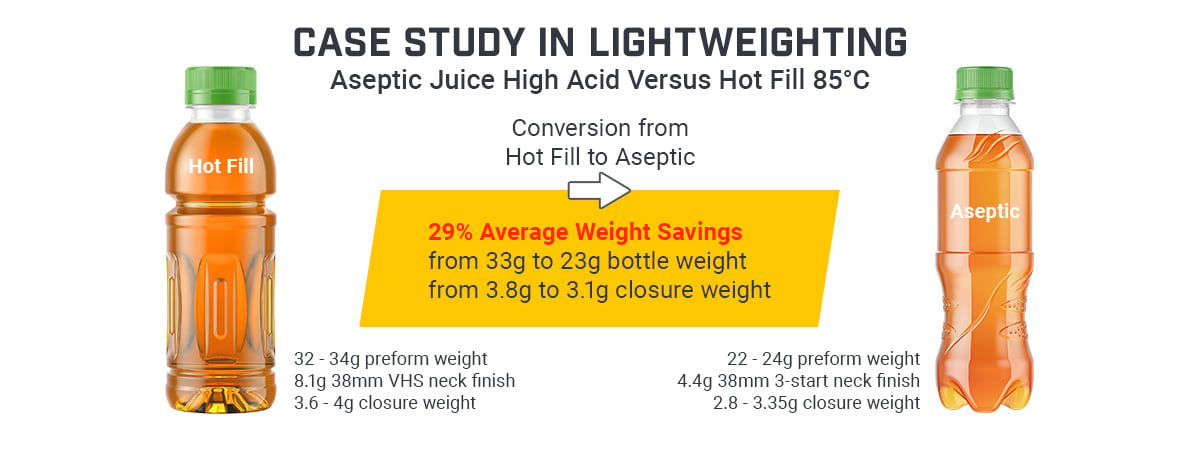
In this real world conversion from the hot fill method to aseptic packaging, the aseptic process enabled a lighter package, resulting in 29% in overall weight savings.
What Are the Other Benefits of Aseptic Packaging?
Beyond lightweighting, recyclability, and nutrient preservation, aseptic packaging improves shelf stability, food quality, and the consumer experience.
Improved shelf stability:
Aseptic packaging maintains product safety and preservation at ambient temperatures. That's why its primary application is 'sensitive' beverages, including juices, teas, and sports drinks.
Elevated food quality:
Because contents and containers are sterilized separately, aseptic packaging ensures consistent quality from packing until the package reaches its final destination. Sealing and sterilizing without refrigeration also supports market trends toward simpler ingredient lists and fewer artificial additives.
Enhanced consumer experience:
Aseptic packaging's design flexibility creates opportunities to optimize package design and manufacturing. Brands can streamline costs and operations while improving the consumer experience.
For example, transitioning from a 38mm to a 32mm thread would not impact what is referred to as a beverage’s “gulp factor.” This enables a seamless transition while optimizing packaging efficiency.
Many leading brands are also leveraging aseptic packaging to standardize neck sizes, improving customer interaction while streamlining production and costs.
Why is PET a Popular Material for Aseptic Packaging?
PET has emerged as a material of choice because of its flexibility, sustainability, and recyclability. Because PET is lightweight, producers can use less material per package. This reduces costs and lowers the carbon footprint of transporting packaging.
How Can Producers Succeed With Aseptic Packaging?
The advantages of aseptic packaging are clear, but getting the most from it takes a strategic approach. Producers need to evaluate operational efficiency, material selection, and total cost of ownership.
The brands and producers succeeding with aseptic packaging have focused on three priorities:
- Increasing uptime
- Reducing changeover times
- Controlling material consumption
The vast majority are also shifting towards sustainable materials and processes that promote circularity.
How Does Husky Enable Aseptic Packaging Success?
Husky's PET injection molding solutions enable brands and producers to succeed with aseptic packaging, regardless of production volume. That support spans four areas:
Preform optimization capabilities
Husky draws on 70 years of packaging design expertise and development experience to enable producers to unlock the true value of their products. Husky works with producers on preform designs that account for:
- Functionality
- Package weight and lightweighting
- Shelf life
- User experience
- Target costs
Each design is optimized for sustainability and the fastest cycle times while achieving 6-sigma quality.
Multi-Layer technology
Aseptic packaging can be produced using mono-layer or multi-layer injection, and both offer clear benefits. Husky's Multi-Layer technology adds further enhancements by optimizing functional barriers and additives.
A functional barrier layer sits between two PET layers, keeping products safe and fresh longer. Producers have the freedom to select the amount, thickness, and placement of the functional material, enabling aseptic packaging with tailored aesthetics and superior performance.
At maximum capacity, a 72-cavity Husky HyPET HPP5e Multi-Layer system can produce:
- 27,000 preforms per hour
- More than 200 million preforms annually
The system is available in various sizes, with annual production capacity ranging from 55 million to 350 million preforms.
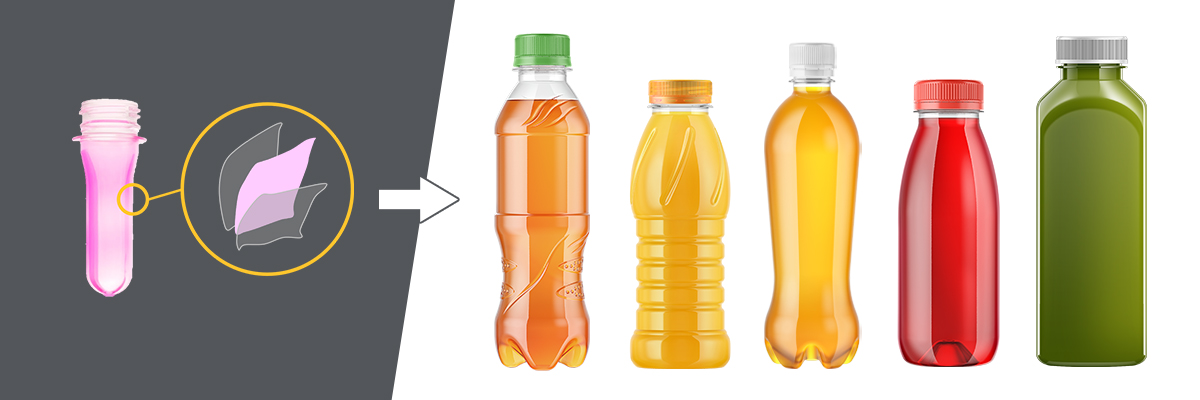
Co-injection can be used to produce Multi-Layer preforms in which a functional layer, typically with barrier properties, is sandwiched between two PET layers.
Real-time proactive monitoring
Husky's Advantage+Elite™ provides real-time, proactive, remote monitoring of systems. Producers can anticipate, identify, and resolve potential issues before they affect productivity or part quality. Here's how it works:
- Dashboards provide a data-driven health score for each system
- Notifications flag potential concerns
- Critical issues trigger immediate customer notification and support to prevent part failure
Reach out to our experts to learn how Husky can enable your success with sustainable aseptic packaging solutions.