
Why Genuine OEM Parts Reduce Risk, Downtime, and Total Cost of Ownership
Choosing genuine Husky OEM parts is a strategic decision that future-proofs your operations with components designed for reliability and backed by rigorous quality standards.
In this article, we cover the benefits of using genuine Husky OEM parts, the risks of non-OEM alternatives, and how to identify non-genuine components.
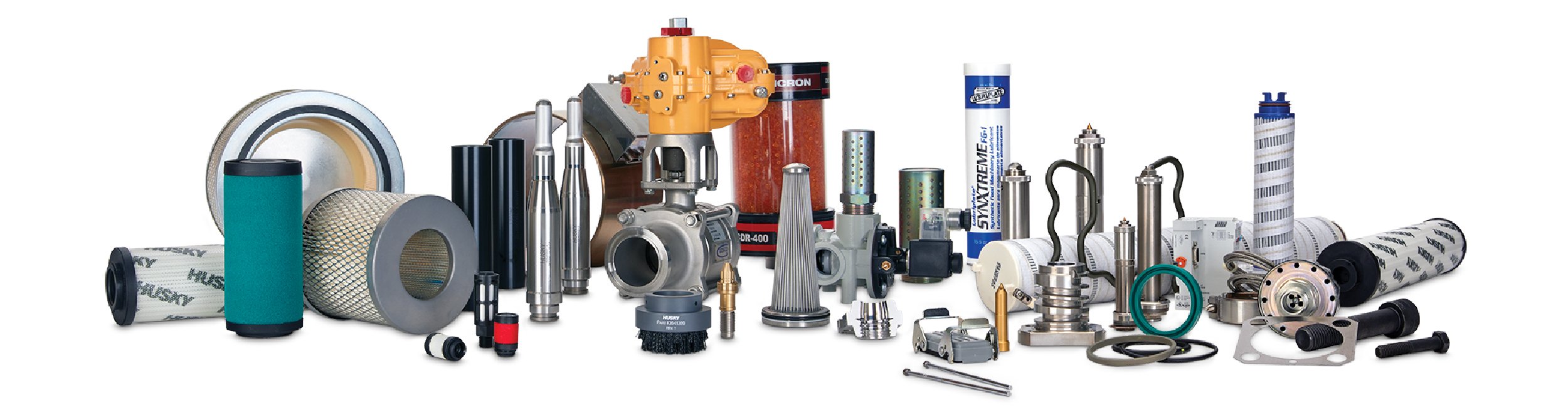
What Are Genuine OEM Parts?
Genuine original equipment manufacturer (OEM) parts are components produced, specified, and tested by the manufacturer that built the original equipment. Non-OEM, or aftermarket, parts are produced by third-party manufacturers with no affiliation to the original equipment maker.
While genuine OEM and non-OEM parts may appear similar, they can differ significantly in quality and reliability.
What Are the Risks of Using Non-OEM or Aftermarket Parts?
Because genuine OEM injection molding parts are specified and tested by the same manufacturer that built the equipment, they are engineered to meet exact machinery specifications. Non-OEM parts may lack this precision and compatibility, leading to a range of operational issues.
The most common of those issues fall into a few distinct categories:
Frequent Replacements & Increased Downtime
Without the precision of genuine OEM parts, non-OEM components tend to wear more rapidly. More frequent replacements mean more downtime for your injection molding machine and disruption to production schedules.
Performance Issues
Reduced precision and compatibility can cause machine alarms, plastic part quality defects, and increased cycle times. Left unaddressed, these issues can escalate into significant production disruptions.
Impact on the Injection Molding Process
Subtle dimensional variations in non-OEM parts introduce unpredictability into the injection molding process, slowing production and affecting the consistency of the final product.
Machine Longevity
Non-OEM parts do not undergo the same meticulous design and rigorous testing as genuine OEM parts. This gap in quality and consistency can cause components to fail prematurely or perform below specification, threatening overall machine longevity.
Warranty Implications
Using non-OEM parts may void the warranty provided by the original equipment manufacturer. This exposes operations to the financial risk of uninsured damages and removes access to the customer support that comes with genuine OEM parts.
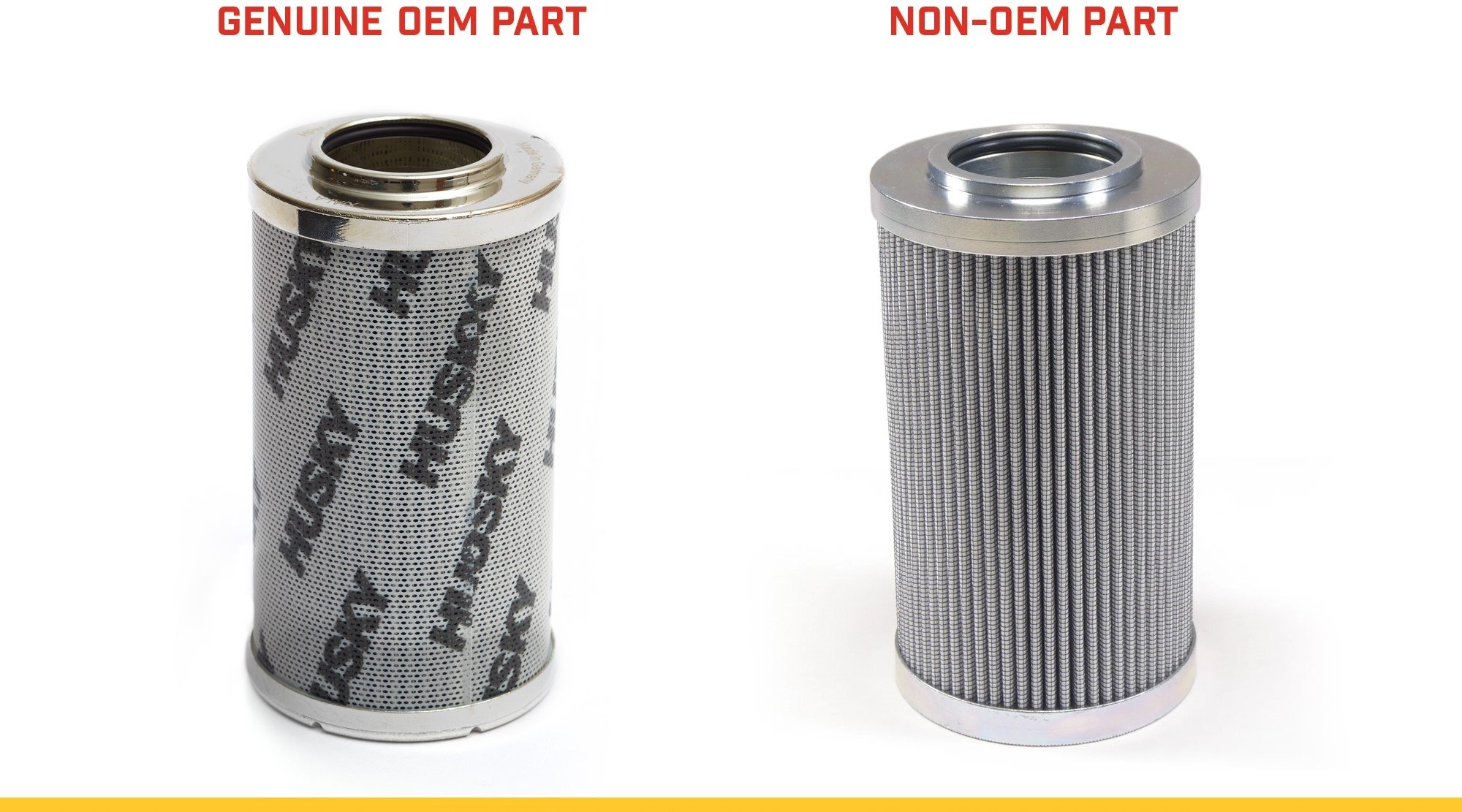
Although they may appear identical to genuine OEM filters, non-OEM filters can have a shorter service life, compromise operational safety, increase the risk of system failure, and ultimately raise lifecycle costs.
Why Choose Genuine Husky OEM Parts?
Genuine Husky OEM parts are engineered to the same specifications as the systems they support, which means they perform as expected from day one.
The operational benefits of using genuine OEM parts are significant and include:
Improved Reliability Through Genuine Fit
Husky invests significantly in research and development to ensure every part meets exact specifications. That investment translates directly into assurance of quality and reliability across your system.
Enhanced Performance
Genuine OEM parts are designed to integrate seamlessly with the machinery they support. The result is enhanced performance, reduced maintenance requirements, and less unplanned downtime.
Lowest Total Cost of Ownership
Non-OEM parts may appear cost-effective at the point of purchase. Over time, however, performance issues, frequent replacements, and potential equipment damage typically result in higher total costs. Genuine OEM parts deliver a lower total cost of ownership across the life of the system.
Warranty Compliance & Access to Support
Using genuine Husky OEM parts keeps your system warranty intact. Husky backs every part with a six-month warranty and provides responsive solutions advisors to support your operations. Maintenance kits are also available to simplify upkeep:
- Essential Parts Kits
- Machine Preventative Maintenance Kits
- Hot Runner Preventative Maintenance Kits
In addition, Husky’s OEM Parts Portal facilitates expedited online ordering, with:
- Over 70 thousand parts available
- 24/7 availability
- 9 global service centers
- More than 100 dedicated parts professionals
- Over 240 global service technicians
- 1-day delivery to most locations
How Do You Identify a Non-OEM Part?
Identifying a non-OEM part often comes down to a few straightforward checks. Each one targets a different type of discrepancy and can be incorporated into standard maintenance and receiving workflows:
1. Check for Part Number Engravings
Authentic OEM parts are marked with specific part numbers engraved by the manufacturer. Cross-referencing these numbers is a quick and reliable method to verify authenticity.
2. Conduct a visual check
Non-OEM parts often show variations in shape, material, and dimensions compared to genuine components. A careful visual check can reveal discrepancies that affect performance or longevity.
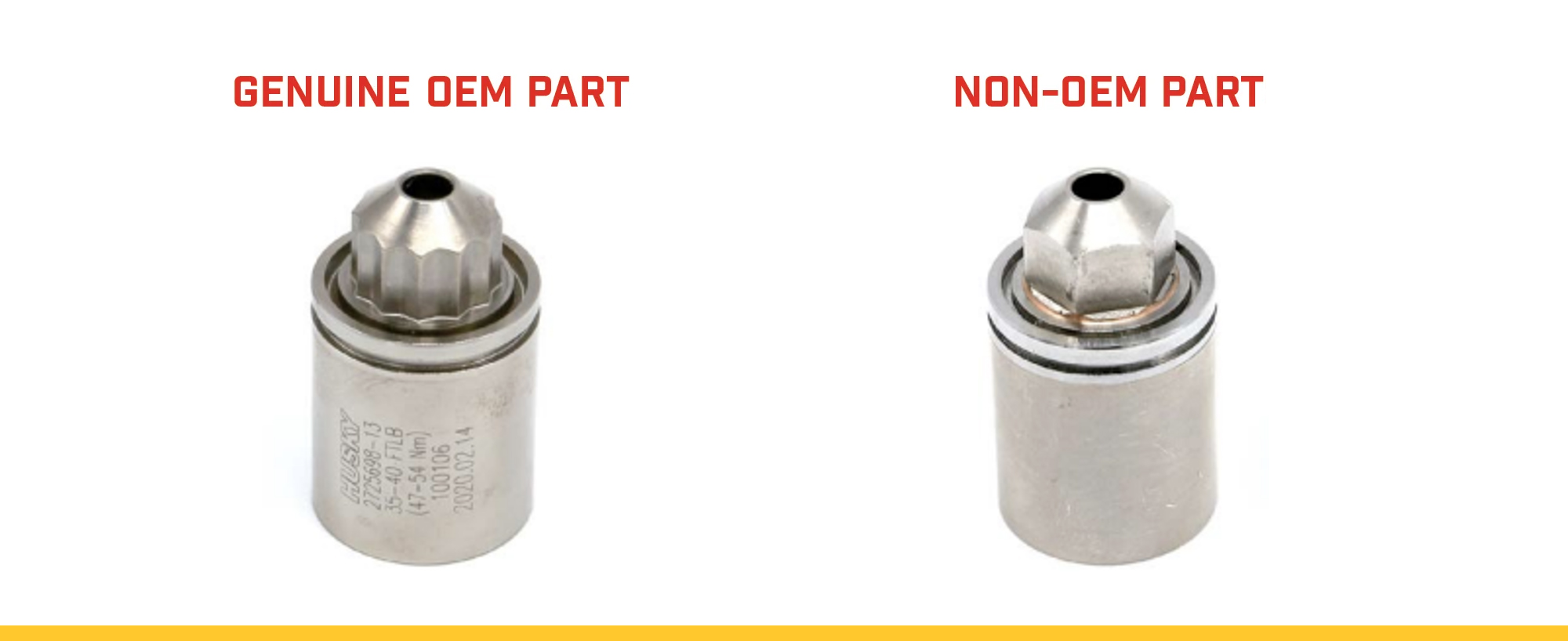
These hot runner nozzle tips are similar but not the same. A visual check reveals differences in shape, material and dimensions.
3. Verify the source
The origin of your parts is a reliable indicator of authenticity. Husky does not work with resellers, so ordering directly from Husky ensures you receive genuine OEM parts. Exercise caution if replacement part pricing falls significantly below typical market rates, as this may indicate non-genuine components.
4. Measure your parts
Where feasible, measure your parts against specified dimensions. Precise dimensions are a hallmark of genuine OEM parts. Measurements that do not align with specified standards are a clear warning sign and can indicate compatibility and performance issues.
By incorporating these checks into your maintenance and replacement processes, you add a reliable layer of assurance that every component meets the original specifications your Husky system was designed to run on.
Reach out to our experts to learn more about how we can enable you to future-proof operations with components designed for excellence and quality.