
When a Small Hose Causes a €60,000 Problem: The Hidden Risk of Non-OEM Hydraulic Hoses
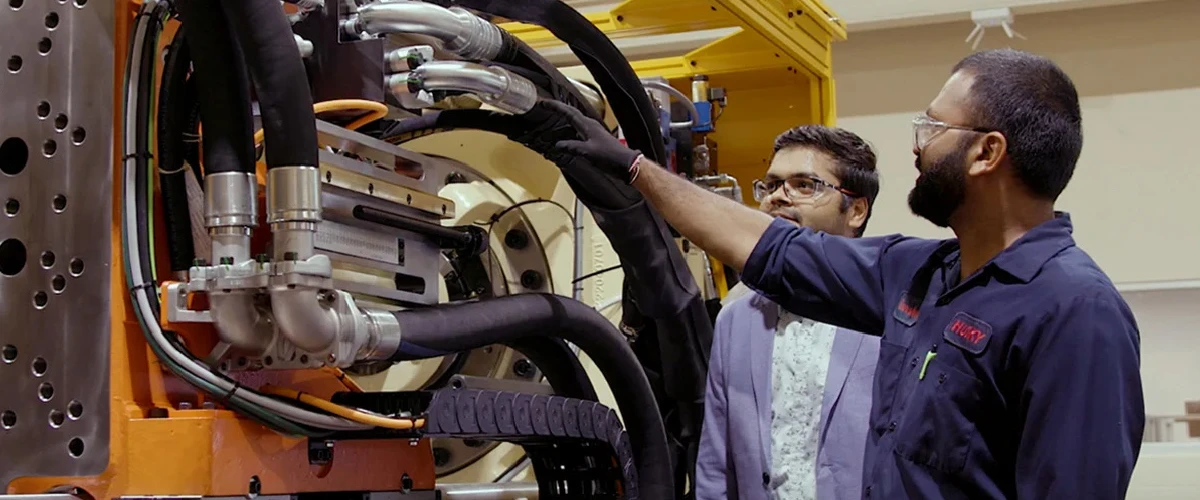
Hydraulic hoses are often treated as routine maintenance components. But in one recent case involving a Husky customer, replacing just two hydraulic hoses with non-OEM alternatives led to approximately two weeks of unplanned downtime and recovery costs approaching €60,000.
What began as a standard maintenance decision quickly escalated into system-wide hydraulic contamination, repeated servo valve alarms, and extensive recovery work. The incident highlights a critical reality in servo-controlled injection molding systems: hydraulic hoses are engineered components, not interchangeable commodities.
In this article, we look at how the failure unfolded, why hose specification matters more than it may appear, and what a preventive approach looks like in practice.
What Led to the Failure
The machine had been operating normally when, during routine maintenance, two hydraulic hoses were replaced with locally sourced, non-OEM alternatives. At installation, there were no visible issues.
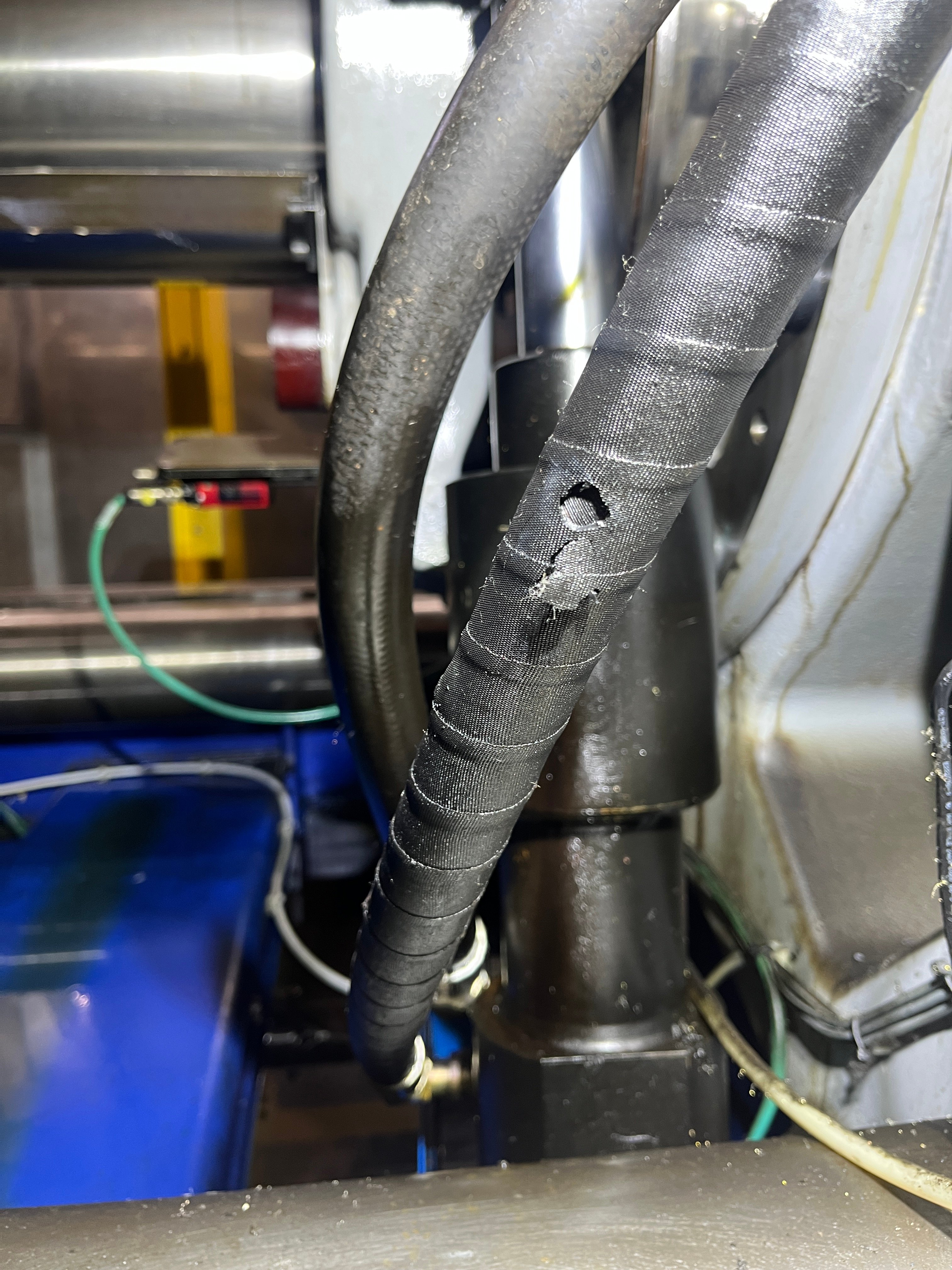
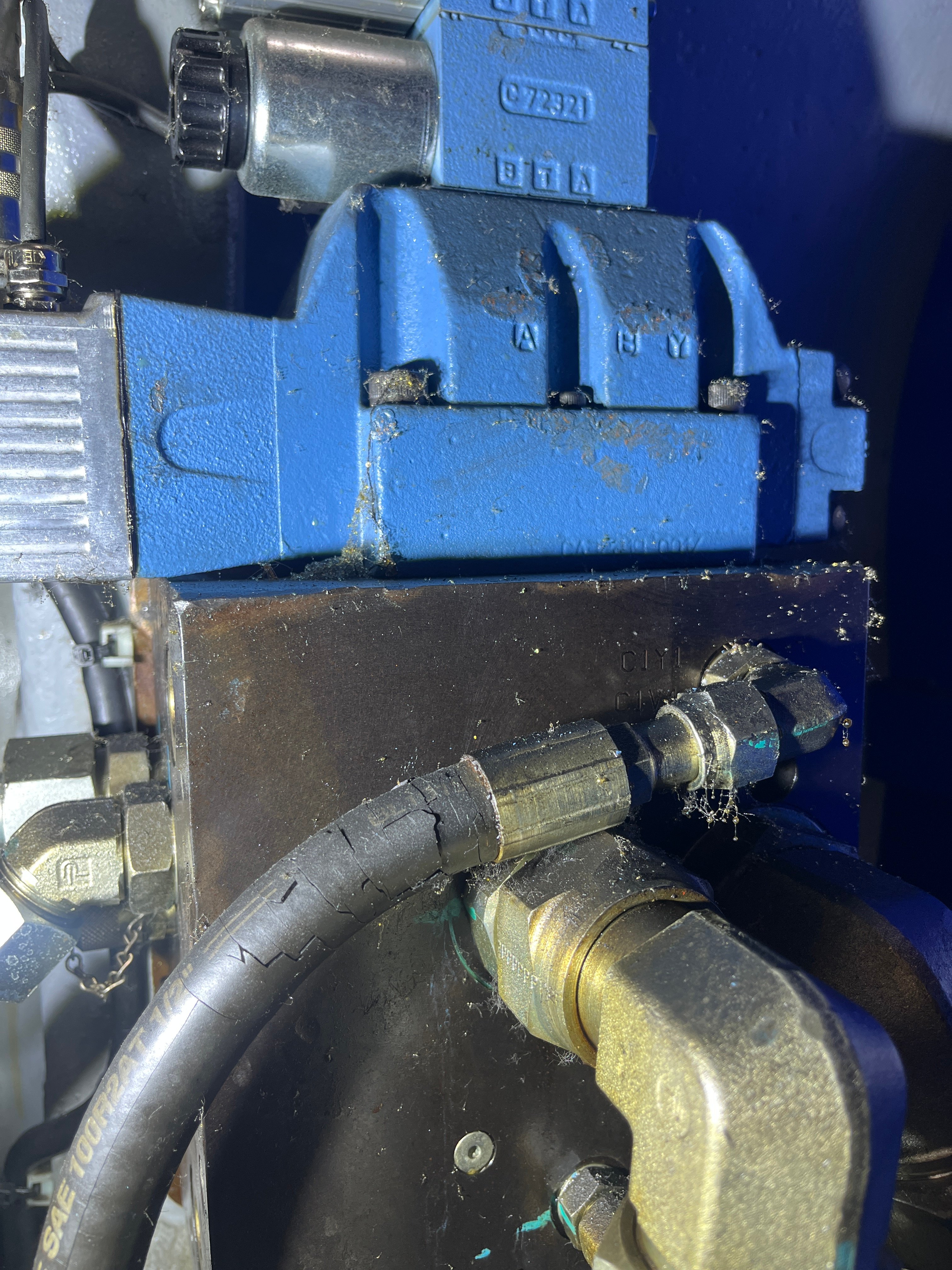
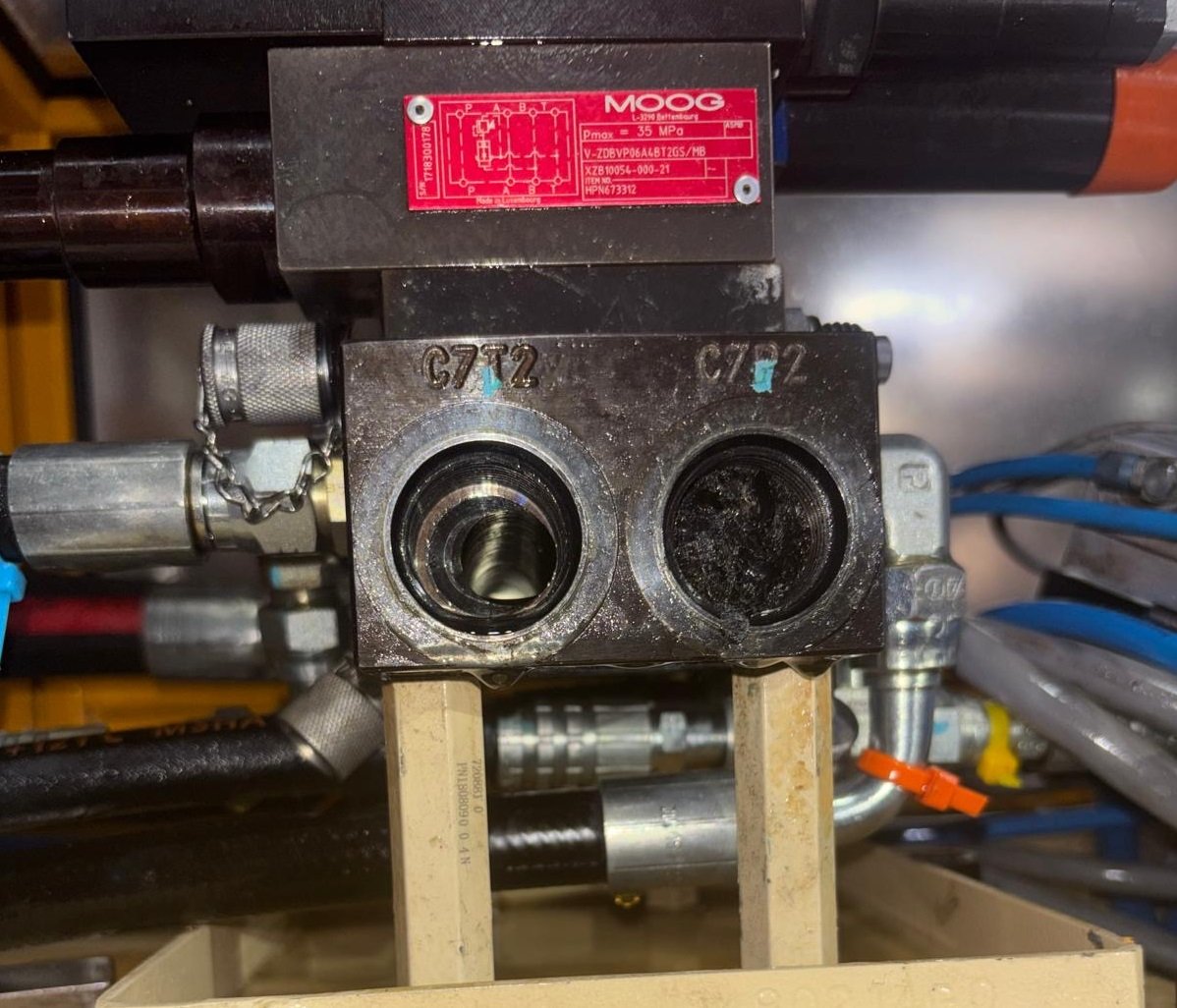
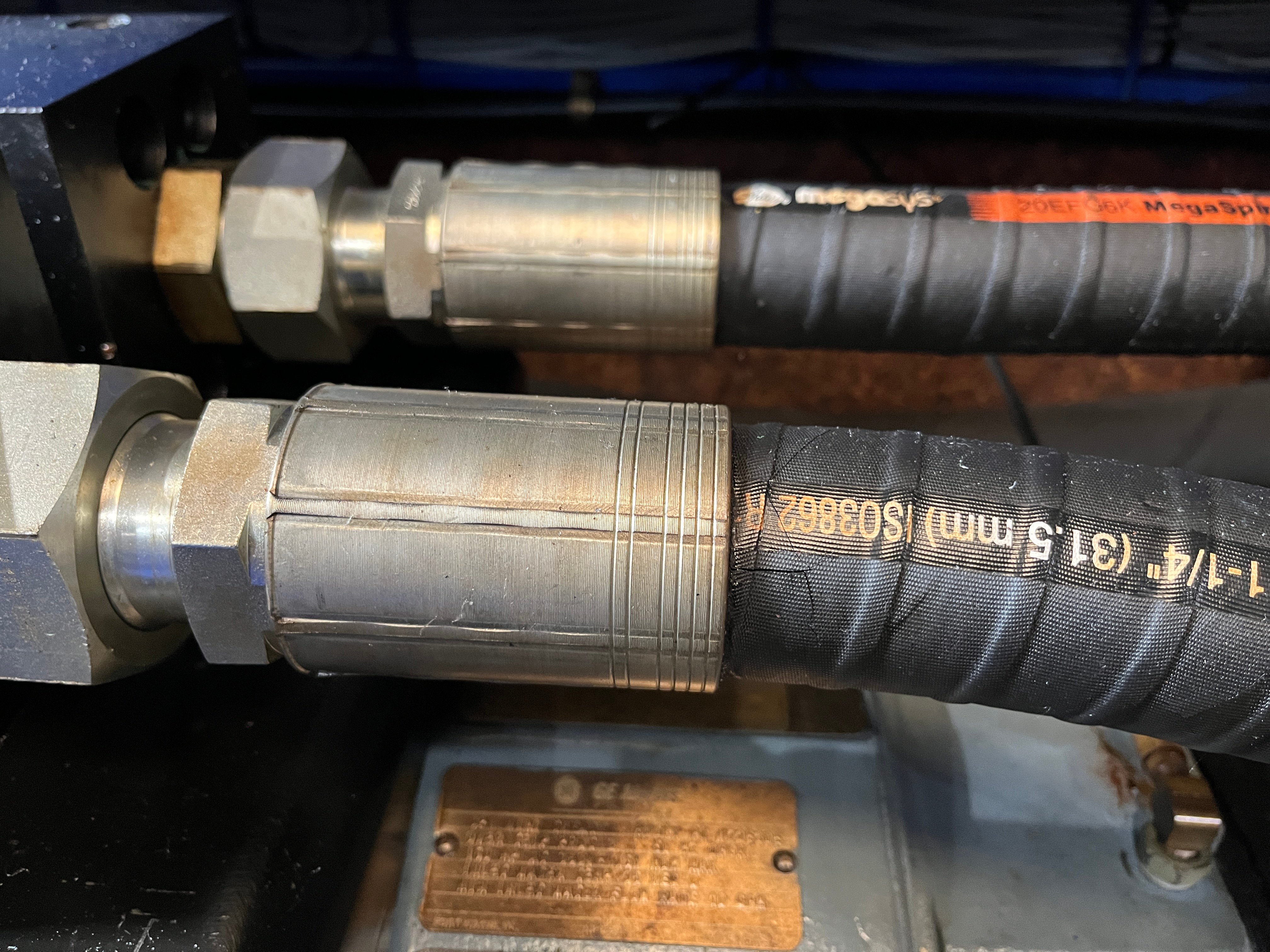
The replacement hoses had not been validated for pressure ratings, oil velocity, hydraulic oil compatibility, or resistance to hydraulic shock. Over time, the internal hose material began to degrade. Although the outer surface appeared intact, the inner liner eroded and released debris into the hydraulic oil. That contamination circulated throughout the system, reaching servo valves, manifolds, and filters.
The result was repeated "servo valve not mechanically centered" alarms, pump lockouts, and an inability to sustain production.
How Hydraulic Hoses Fail Internally
Hydraulic hose degradation often occurs internally, without any outward signs of damage. Even when no cracks or leaks are visible, damage can develop due to excessive flow velocity, chemical incompatibility, thermal stress, or dynamic loading.
In servo-controlled systems, even microscopic contamination can disrupt valve precision. Once particles enter the hydraulic circuit, stability deteriorates quickly. In this case, internal hose erosion triggered a chain reaction that affected the entire system.
What Are the Safety Risks of Non-OEM Hydraulic Hoses?
Apart from reliability issues, hydraulic hose failures also carry safety implications. Industry safety guidance notes that burst hoses, pinhole leaks, or improperly assembled fittings can release high-pressure fluid capable of causing burns, cuts, or fluid injection injuries. In severe cases, coupling blow-off or whipping hose events may occur under pressure.
While this incident primarily resulted in downtime and contamination, incorrect hose specification increases both operational and safety exposure.
Replacement of hydraulic hoses every 3 years is critical for safety and for machine performance
What Does Hydraulic Contamination Actually Cost?
Once contamination spread through the hydraulic circuit, recovery became complex, requiring multiple on-site service visits, removal and cleaning of servo valves, manifold disassembly, extended oil flushing, and system recalibration before restart. Even after initial cleaning, contamination continued to reappear until all affected components were addressed.
The machine remained out of production for approximately two weeks, with the combined cost of service intervention and lost production approaching €60,000, far exceeding the cost of preventive replacement.
Why Does Hydraulic Hose Specification Matter in Injection Molding?
Hydraulic hoses in high-performance injection molding systems must meet precise requirements for pressure capability, flow velocity, material compatibility, and cleanliness.
Because they are engineered as part of the complete hydraulic architecture, alternatives that lack validation for specific operating conditions can compromise the entire system and increase long-term risk.
How Often Should Hydraulic Hoses Be Replaced?
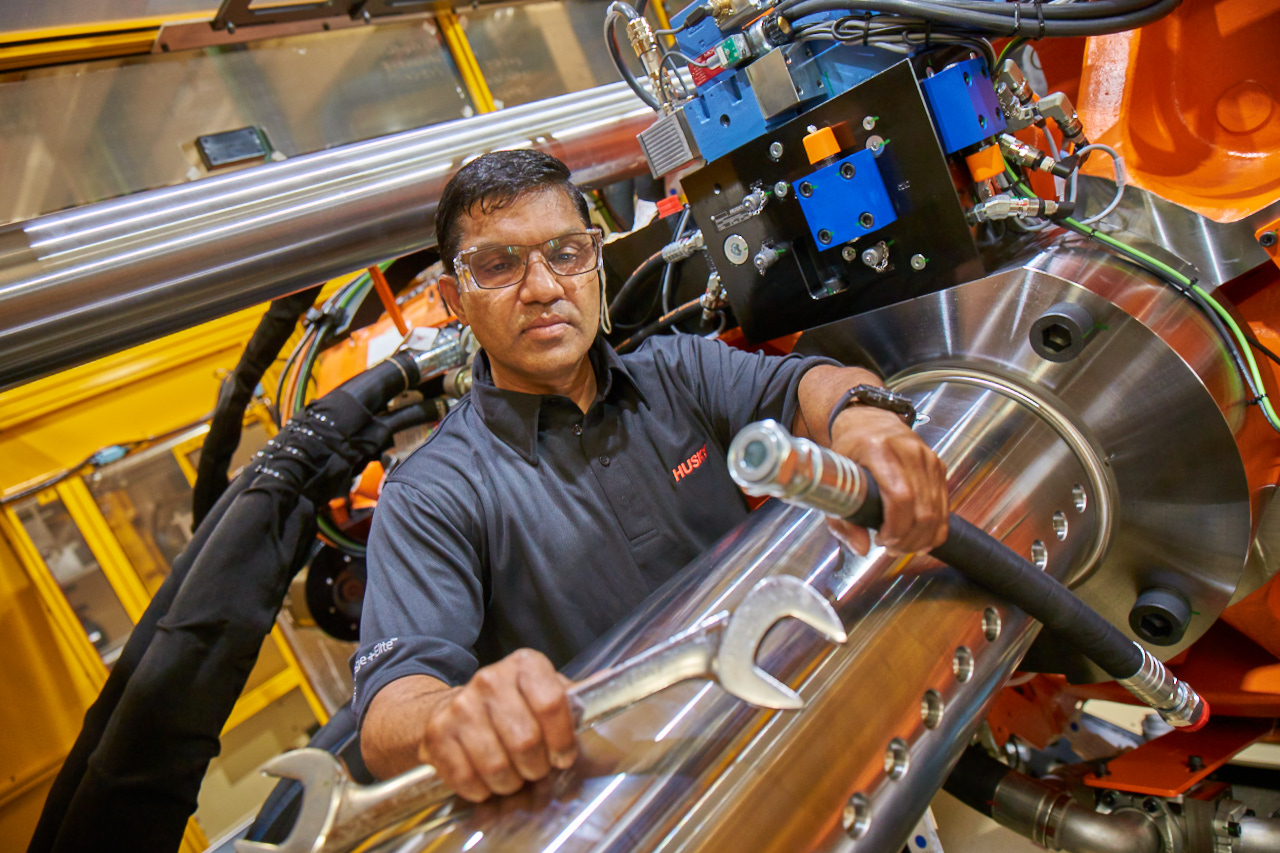
To reduce contamination risk and support safe, predictable machine operation, Husky recommends replacing hydraulic hoses every three years as a precaution, even when no external damage is visible. After this period, material properties may begin to degrade internally, increasing the likelihood of erosion and contamination.
Using Genuine OEM hose kits helps ensure correct specification, validated performance, and compatibility with machine hydraulics. Preventive replacement supports machine availability, reduces safety exposure, and helps avoid costly unplanned downtime. It is a straightforward, low-cost way to protect against a failure mode that is difficult to detect and expensive to recover from.
Learn more about Genuine OEM parts or order parts directly through the Spare Parts Portal to support your preventive maintenance planning.